The best grass types for Chula Vista are Bermuda grass for sunny, high-traffic yards, tall fescue for partial shade and year-round green color, St. Augustine for warmer yards with some shade, and zoysia for homeowners who want a slower-growing, dense lawn and can wait for establishment. In many Eastlake and Otay Ranch lawns, Bermuda is the practical choice. In older Terra Nova or west-side yards with shade, tall fescue or St. Augustine may make more sense.
The catch is simple: grass type will not rescue a bad irrigation layout.
A lawn can be the right species and still thin out if sprinkler heads miss the corners, water runs down a slope, or old clay soil stays wet in one spot and dry two feet away. Before paying for seed or sod, match the grass to the yard and check the water coverage.
This guide breaks down the best grass types for Chula Vista homeowners should consider by neighborhood, sun, shade, foot traffic, water use, and maintenance.
Quick Answer by Neighborhood
Use this as the fast version. The details matter, but this table will keep most homeowners out of trouble.
For best grass types for Chula Vista decisions, think of the table as a first filter, not a final prescription. Sun, shade, pets, slope, and sprinkler coverage still decide whether the grass will hold up.
| Chula Vista Area | Better Grass Direction | Why It Fits |
|---|---|---|
| Eastlake | Bermuda or hybrid Bermuda | Hotter inland afternoons, full sun, kids, pets, HOA-visible lawns |
| Otay Ranch | Bermuda, zoysia, or tall fescue in mixed shade | Newer homes, reflected heat, active family yards |
| Rancho Del Rey | Tall fescue, St. Augustine, or Bermuda by sun exposure | Mixed slopes, mature shade, variable irrigation |
| Terra Nova | Tall fescue or St. Augustine in shade, Bermuda in sunny strips | Older irrigation and more mature trees |
| Sunbow | Bermuda for sun, tall fescue for partial shade | Warm exposure with some mixed yard layouts |
| Bonita edges | Tall fescue, St. Augustine, or zoysia | Larger lots, trees, and more shade variation |
| Older west Chula Vista | Tall fescue or St. Augustine where shade is real | Coastal influence, older trees, uneven older systems |
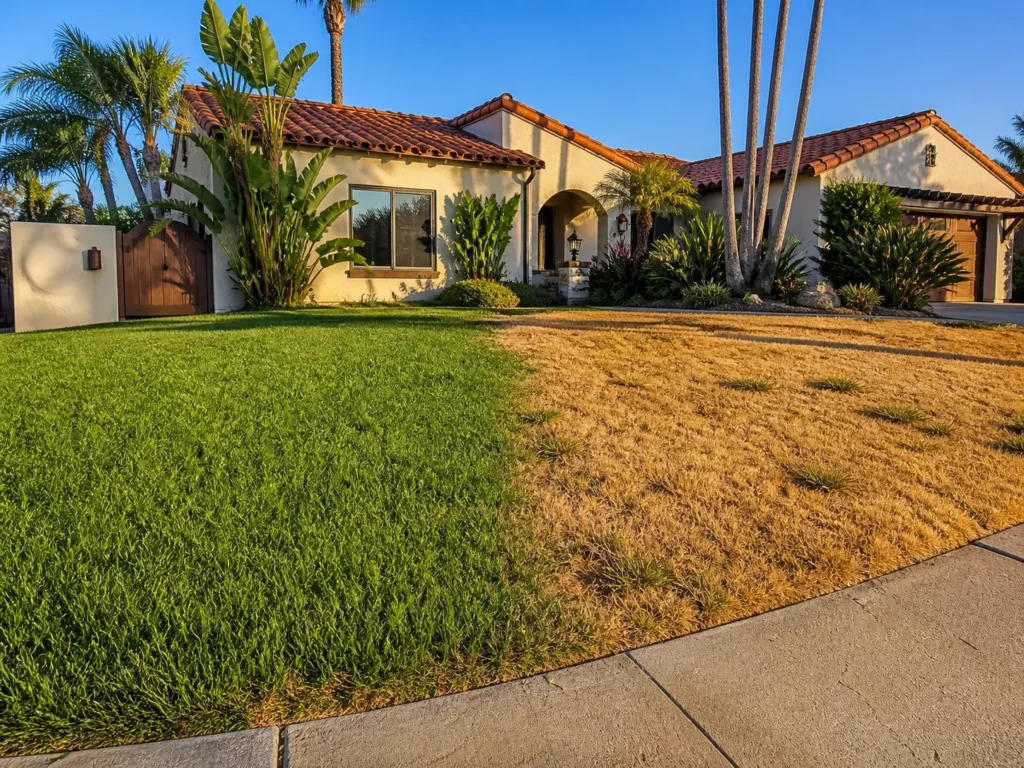
If the lawn is already thin, patchy, or browning in the same place each summer, start with why grass turns brown in Chula Vista before choosing sod. Grass selection should come after the obvious failure points are ruled out.
Bermuda Grass: Best for Hot, Sunny, Active Lawns
Bermuda is usually the safest choice for a sunny Chula Vista lawn that gets kids, dogs, foot traffic, and afternoon heat. It spreads by stolons and rhizomes, which means it can recover from wear better than bunch-type grasses.
In Eastlake and Otay Ranch, south-facing turf near driveways and pavers often takes a beating from reflected heat. Bermuda handles that better than most common lawn grasses. It also fits the warm-season pattern UC IPM describes: warm-season grasses perform best where summers are hot and winters are mild.
Bermuda’s strengths:
- Strong heat tolerance
- Good drought tolerance once established
- Excellent traffic recovery
- Spreads into thin spots
- Good fit for full sun
- Lower water demand than cool-season turf under WUCOLS factors
Bermuda’s weaknesses:
- Poor shade tolerance
- Can go brown or straw-colored in winter dormancy
- Needs regular mowing during active growth
- Can invade beds if edges are not maintained
- May build thatch, especially in dense hybrid varieties
Here is the plain opinion: Bermuda is not the prettiest grass every month of the year, but it is often the most practical lawn grass for hot, active Chula Vista yards. If the homeowner can accept winter color changes, Bermuda usually earns its keep.
For ongoing mowing, edging, fertilization timing, and seasonal maintenance, lawn care services should be matched to the grass type. Bermuda cut too tall can look puffy. Bermuda cut too short during stress can scalp and brown out.
Tall Fescue: Best for Green Color and Partial Shade
Tall fescue is a cool-season grass, but it is one of the better cool-season options for Southern California because it has good heat tolerance and deeper roots than many cool-season grasses. UC IPM describes tall fescue as adapted to sunny or partially shady conditions with excellent heat stress tolerance.
In Chula Vista, tall fescue is useful where homeowners want a greener winter look than Bermuda provides. It also works in lawns with some afternoon shade from trees, fences, or two-story homes.
Tall fescue’s strengths:
- Stays green more consistently through mild winters
- Handles partial shade better than Bermuda
- Has good heat tolerance for a cool-season grass
- Can be seeded or overseeded
- Works for many older residential lawns
Tall fescue’s weaknesses:
- Uses more water than warm-season grasses
- Does not spread aggressively into bare spots
- Thin areas usually need reseeding
- Can struggle in extreme reflected heat
- Coarser texture than some homeowners expect
WUCOLS lists cool-season turfgrasses such as tall fescue at higher irrigation factors than warm-season turfgrasses. That does not mean tall fescue is wrong. It means homeowners should not choose it only because they want low water use.
Tall fescue is a good compromise when the yard has shade, the owner wants green color, and the irrigation system can deliver deep, even watering without runoff. It is less forgiving in a neglected irrigation zone.
St. Augustine: Best for Warm Lawns With Some Shade
St. Augustine has a thicker blade and a softer, lush look. It can handle some shade better than Bermuda, and it fits warm climates. For a homeowner with partial shade, a small family lawn, and a preference for a broader-bladed turf, it can be a good match.
In older Chula Vista neighborhoods, St. Augustine sometimes appears in side yards or partially shaded lawns where Bermuda has thinned. That does not mean it belongs everywhere.
St. Augustine’s strengths:
- Better shade tolerance than Bermuda
- Lush, dense look
- Warm-season growth habit
- Spreads by stolons
- Good for low to moderate traffic
St. Augustine’s weaknesses:
- Moderate traffic tolerance, not ideal for heavy play
- Usually established by sod or plugs, not seed
- Can need steadier moisture than Bermuda
- Sensitive to mowing too low
- Can develop pest or disease issues when stressed
For families with big dogs or constant backyard play, Bermuda may recover better. For a front lawn with morning sun and afternoon shade, St. Augustine may look better.
If dead strips keep forming near sprinkler lines, read sprinkler leaks causing dead grass before assuming the grass species failed.
Zoysia: Good Grass, Slower Payoff
Zoysia can work in San Diego County lawns. It forms dense turf, tolerates heat, handles foot traffic, and grows slower than Bermuda. Some homeowners like it because it can feel softer and need less frequent mowing once established.
The downside is patience. Zoysia is slower to establish, and repairs can take longer. It may also cost more upfront depending on sod or plug availability.
Zoysia’s strengths:
- Dense growth
- Good heat tolerance
- Good traffic tolerance
- Slower vertical growth than Bermuda
- Can handle some partial shade better than common Bermuda
Zoysia’s weaknesses:
- Slower establishment
- Slower recovery from damage
- Can be costly to install
- Winter dormancy may still show
- Not always the easiest local option to source
Zoysia makes more sense for a homeowner who wants a long-term lawn and is willing to wait. It is not the best pick for a quick patch job before a home sale or HOA notice deadline.
Grass Types I Would Be Careful With
Some grasses show up in California conversations but need caution in Chula Vista.
Kikuyu can handle coastal Southern California conditions, and UC IPM notes it is adapted to coastal regions within about fifty miles of the ocean. The problem is behavior. It spreads aggressively, can be difficult to mow, and may build heavy thatch. For many small suburban yards, that aggressiveness becomes maintenance.
Kentucky bluegrass and perennial ryegrass can look great in cooler periods, but they often demand more water and care than many Chula Vista homeowners want. They are better as blend components or temporary overseeding choices than default permanent lawns here.
Fine fescue can help in shade and low-mow areas, but it is not the answer for hot, high-traffic family lawns. It is better used in specific niches, slopes, or ornamental low-use areas.
Seashore paspalum is worth knowing near salt-influenced or reclaimed-water contexts, but most homeowners should get site-specific advice before choosing it. It is not the everyday default for a normal front yard.
Match Grass to the Yard, Not the Neighborhood Name
Neighborhoods help, but the actual yard decides. A sunny Terra Nova lawn may behave more like Eastlake. A shaded Otay Ranch side yard may behave more like an older west-side lot.
That is why best grass types for Chula Vista advice should never stop at a ZIP code. The grass has to match the microclimate inside the fence.
Before choosing seed or sod, look at:
- How many hours of direct sun the lawn gets
- Whether the hottest sun hits from noon to late afternoon
- Where water runs after irrigation
- Whether clay soil stays wet or hardens fast
- How often kids or dogs use the turf
- Whether the lawn is for looks or actual play
- Whether HOA rules require a green front yard
- How many sprinkler zones serve the lawn
- Whether the yard has tree roots near the surface
That is the part most online grass guides skip. They name the grass, but they do not ask whether the yard can support it.
For broader yard changes, landscaping services in Chula Vista can include turf reduction, new beds, soil prep, irrigation changes, and transitions from lawn to low-water planting.
Water Use: The Part Nobody Should Ignore
Grass selection is also a water decision.
UC Davis WUCOLS lists warm-season turfgrasses such as common Bermuda, hybrid Bermuda, St. Augustine, zoysia, seashore paspalum, buffalograss, and kikuyu at lower irrigation factors than cool-season grasses. Tall fescue, perennial ryegrass, Kentucky bluegrass, and fine fescue sit higher.
In plain English, warm-season turf usually needs less water for acceptable performance in this region. Cool-season turf can stay greener in mild weather, but it often asks more from the irrigation system.
Local water rules matter too. Sweetwater Authority prohibits watering lawns in a way that causes runoff and watering within 48 hours of rain. Otay Water District lists similar prohibited wasteful practices, including runoff and watering within 48 hours after at least a quarter inch of rainfall.
The City of Chula Vista works with Otay Water District and Sweetwater Authority on conservation. It also has a landscape water conservation ordinance for new or rehabilitated landscapes.
If you are planning a bigger lawn change, it may be smarter to reduce turf and use drought-tolerant landscaping in Chula Vista around the lawn. A smaller healthy lawn usually beats a larger struggling one.
Best Grass for Dogs and Kids
For dogs and kids, Bermuda is usually the first grass to consider in sunny yards. It recovers from wear, spreads into thin areas, and tolerates heat. Zoysia can also handle traffic, but it repairs more slowly.
Tall fescue can work for moderate play, especially in partial shade. The catch is repair. Since tall fescue is bunch-type, bare spots do not fill in the way Bermuda does. Dog runs and repeated footpaths often need reseeding.
St. Augustine is better for moderate use than rough play. It looks lush, but heavy traffic can thin it.
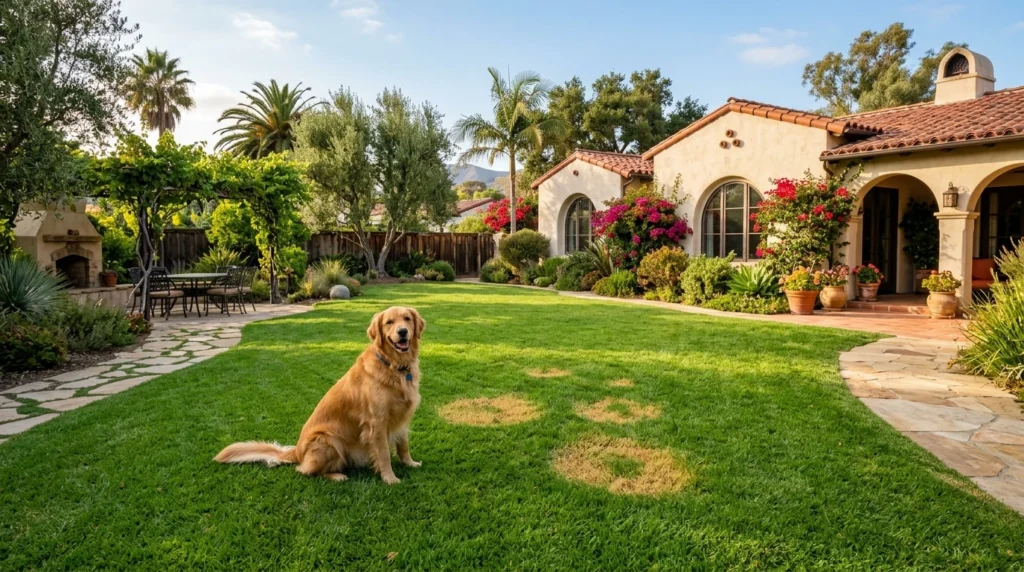
For dog urine spots, the grass type matters less than watering, soil salts, and repeated use patterns. A small dog run, stepping stones, or mulch path may save the main lawn from constant damage.
If weeds show up after turf thins, handle weed control in Chula Vista early. Thin turf plus regular irrigation gives weeds a clear opening.
Best Grass for Shade
Shade is where many Chula Vista lawn mistakes begin.
Bermuda wants sun. It may survive in partial shade, but it usually gets thin and weak where buildings, fences, or trees block afternoon light. Thin Bermuda invites weeds, mossy patches, bare soil, and homeowner frustration.
For partial shade, look first at tall fescue or St. Augustine. Fine fescue can help in certain low-traffic shade areas, but it is not a hard-play lawn.
Shade decisions:
| Yard Condition | Better Direction |
|---|---|
| Full sun, heavy use | Bermuda |
| Full sun, slower growth preference | Zoysia |
| Partial shade, year-round green | Tall fescue |
| Warm partial shade, moderate use | St. Augustine |
| Deep shade under trees | Consider non-lawn groundcover or mulch |
Deep shade is not a grass problem. It is a light problem. Sometimes the right answer is not a new turf variety. It is mulch, stepping stones, shade plants, or a reduced lawn footprint.
For shade or awkward strips where turf repeatedly fails, consider a smaller lawn with climate-appropriate landscape beds selected for that exposure.
Best Grass for HOA Front Yards
HOA front yards usually need consistency. The grass does not have to be perfect, but it should look maintained from the street.
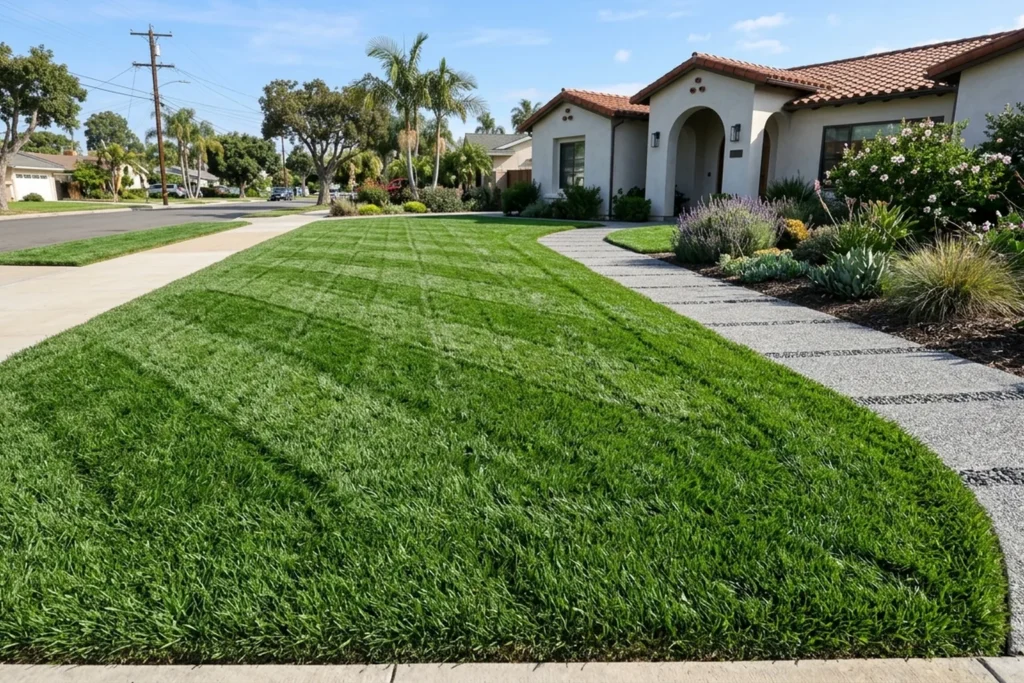
For Eastlake and Otay Ranch front yards, Bermuda often works when the lawn has full sun and good irrigation. It handles heat and recovers from regular use, but winter dormancy can create a brownish look that some homeowners dislike.
Tall fescue can keep a greener winter appearance, which helps curb appeal. It may need more summer water, especially near sidewalks, driveways, and south-facing walls.
St. Augustine can look good in warmer partial shade, but it is not ideal for constant foot traffic or low mowing.
If your HOA is strict about front yard appearance, ask about these details before replacing turf:
- Is winter dormancy acceptable?
- Are warm-season brown months a violation?
- Are drought-tolerant conversions allowed?
- Does the HOA require architectural review?
- Are artificial turf or lawn alternatives restricted?
- Are front yard planting plans required?
For curb appeal planning, pair the grass decision with Chula Vista front yard ideas instead of treating turf as the whole design.
Before You Replace the Grass
Here is what often happens. A homeowner sees brown grass and buys seed or sod. The new grass looks decent for a few weeks. Then the same area browns again.
The cause was never the grass.
Before replacement, check:
1. Sprinkler coverage. Run each zone and watch the actual spray pattern. 2. Pressure. Low pressure leaves weak corners. High pressure can mist into the air. 3. Runoff. Water on sidewalks means the root zone may not be getting enough. 4. Soil compaction. Hard soil sheds water instead of absorbing it. 5. Shade. Grass may be starving for light, not water. 6. Mowing height. Scalped grass dries faster. 7. Weed pressure. Thin turf may be losing space to weeds.
For uneven coverage, start with irrigation and sprinkler repair. Fixing water distribution first can save the cost of replacing healthy sod that was never the real issue.
If the grass species still suits the site, lawn renovation in Chula Vista may preserve useful turf instead of replacing the whole yard. Where the root zone is compacted, assess core aeration during the grass’s active growth period; it will not cure deep shade or a broken sprinkler.
Seed, Sod, or Plugs?
The installation method matters almost as much as the grass type.
When people compare best grass types for Chula Vista options, they often skip this part. A good grass installed at the wrong season or with poor establishment watering can look worse than an average grass installed correctly.
| Method | Best For | Watch Out For |
|---|---|---|
| Seed | Tall fescue, some Bermuda, budget repairs | Needs consistent moisture during establishment |
| Sod | Fast results, HOA deadlines, full lawn replacement | Higher upfront cost, irrigation must be ready |
| Plugs | St. Augustine, zoysia, smaller areas | Slow fill-in, weed control needed between plugs |
| Overseeding | Thin cool-season lawns | Does not solve irrigation or shade issues |
Bermuda can be seeded or sodded depending on variety. Hybrid Bermuda is usually sod. Tall fescue can be seeded, which makes repairs easier. St. Augustine is usually installed by sod or plugs. Zoysia often comes as sod or plugs and takes patience.
UC IPM recommends establishing warm-season grasses during active growth in late spring or early summer, and cool-season grasses in fall or spring. That timing matters. Installing warm-season sod too late can slow rooting before cooler weather.
For a full replacement, sod installation in Chula Vista should include a prepared, level root zone and an irrigation check before delivery. Ask which cultivar is being supplied, how it tolerates the yard’s actual shade, and who will adjust establishment watering after rooting.
A Chula Vista Site Check Before Ordering
Compare the sunlit strip beside a driveway with the lawn beneath mature trees; they may need different solutions even on the same Terra Nova or Rancho Del Rey property. Record sun at morning, midday, and late afternoon, then run each irrigation zone and note overspray, dry corners, and runoff. Identify the water provider on your bill before arranging establishment watering. A neighborhood name alone cannot tell you the soil texture, grass cultivar, or permitted schedule.
What About Replacing Grass With Landscaping?
Not every Chula Vista yard needs more grass. Some need less.
Narrow strips, steep slopes, deep shade, and hot parkways are often poor turf areas. They take water, collect weeds, and rarely serve a real purpose. That is where lawn reduction can be smarter than lawn replacement.
Good candidates for turf reduction:
- Sloped front strips that shed water
- Skinny side yards
- Turf under dense tree shade
- Parkways with reflected heat
- Areas used only for looks
- Corners with repeated sprinkler runoff
Grass still makes sense where people use it: kids playing, dogs resting, barefoot backyard space, or a clean front-yard focal point. Decorative grass that nobody uses may not be worth the water.
The San Diego County Water Authority notes state rules restricting watering of non-functional grass in certain HOA, commercial, industrial, and institutional common areas. Individual home yards are treated differently, but the direction is clear: functional turf is easier to justify than ornamental turf.
Ask for separate scopes for turf repair, full replacement, and a water-wise landscape redesign so soil preparation, irrigation changes, and ongoing care can be compared fairly.
A Practical Recommendation
For most sunny Chula Vista family lawns, choose Bermuda. For partial shade and green winter color, choose tall fescue. For warmer partial shade with moderate use, consider St. Augustine. For a dense premium lawn where patience is acceptable, consider zoysia.
That is the short version.
The better version is this: choose the smallest lawn that actually serves a purpose, then pick the grass that fits that specific area. Use low-water planting, mulch, trees, or hardscape around it.
That approach works better than forcing one turfgrass across the whole property.
For neighborhood-specific help, ChulaVistaLawnCare.com connects homeowners with Chula Vista lawn care and landscaping help across local service areas, including Eastlake lawn care, Otay Ranch lawn care, and Terra Nova lawn care.
Call (619) 604-8495 if you want help deciding whether to repair, reseed, resod, or reduce your lawn. If the same turf area keeps failing, the first question should not be “Which grass should I buy?” It should be “Why did the last grass fail here?”
FAQ
What is the best grass for Chula Vista lawns?
Bermuda is often the best choice for sunny, hot, high-traffic Chula Vista lawns. Tall fescue is better for partial shade and year-round green color. St. Augustine works in warm areas with some shade and moderate use. Zoysia can work for dense, slower-growing lawns when the homeowner can wait for establishment.
Is Bermuda grass good in Eastlake and Otay Ranch?
Yes, Bermuda is often a strong fit for Eastlake and Otay Ranch because many yards get full sun, reflected heat, and family foot traffic. It still needs proper irrigation and mowing. It may turn brown during cooler winter periods.
Is tall fescue good in Chula Vista?
Tall fescue can work well in partial shade and mixed sun. It stays greener in winter than Bermuda, but it generally needs more water than warm-season turf. Thin spots usually need reseeding because tall fescue does not spread aggressively.
What grass handles shade best in Chula Vista?
Tall fescue and St. Augustine usually handle partial shade better than Bermuda. Deep shade under trees may need mulch, shade plants, or a non-lawn groundcover instead of turf.
Which grass uses the least water?
Warm-season grasses such as Bermuda, zoysia, St. Augustine, and seashore paspalum generally have lower irrigation factors than cool-season grasses such as tall fescue, perennial ryegrass, and Kentucky bluegrass, according to UC Davis WUCOLS turfgrass data.
Should I seed or sod my Chula Vista lawn?
Use seed for tall fescue repairs or budget-friendly renovation. Use sod when you need fast coverage, an HOA deadline, or a full replacement. St. Augustine and zoysia are often installed by sod or plugs. Fix irrigation before either method.
Why does new sod die in the same spot?
Repeated sod failure often points to irrigation coverage, soil compaction, runoff, shade, pests, disease, or mowing stress. The grass species may not be the main cause.
Is artificial turf better than grass?
Artificial turf can reduce mowing and watering, but it has heat, drainage, cost, and HOA considerations. It is also not accepted in some water rebate programs. For many homes, a smaller real lawn plus drought-tolerant landscaping is a better balance.