Sod Installation Chula Vista, CA | New Lawn Installation
Some lawn problems don’t have a gradual fix. If your Chula Vista yard is dead from drought, damaged beyond repair by grubs or disease, or simply starting from bare dirt after new construction, overseeding and fertilizing aren’t the answer – sod installation Chula Vista homeowners rely on for immediate results is.
- Professional Ground Preparation
- Climate-Matched Sod Varieties
- Free Estimates
What Is Sod Installation?
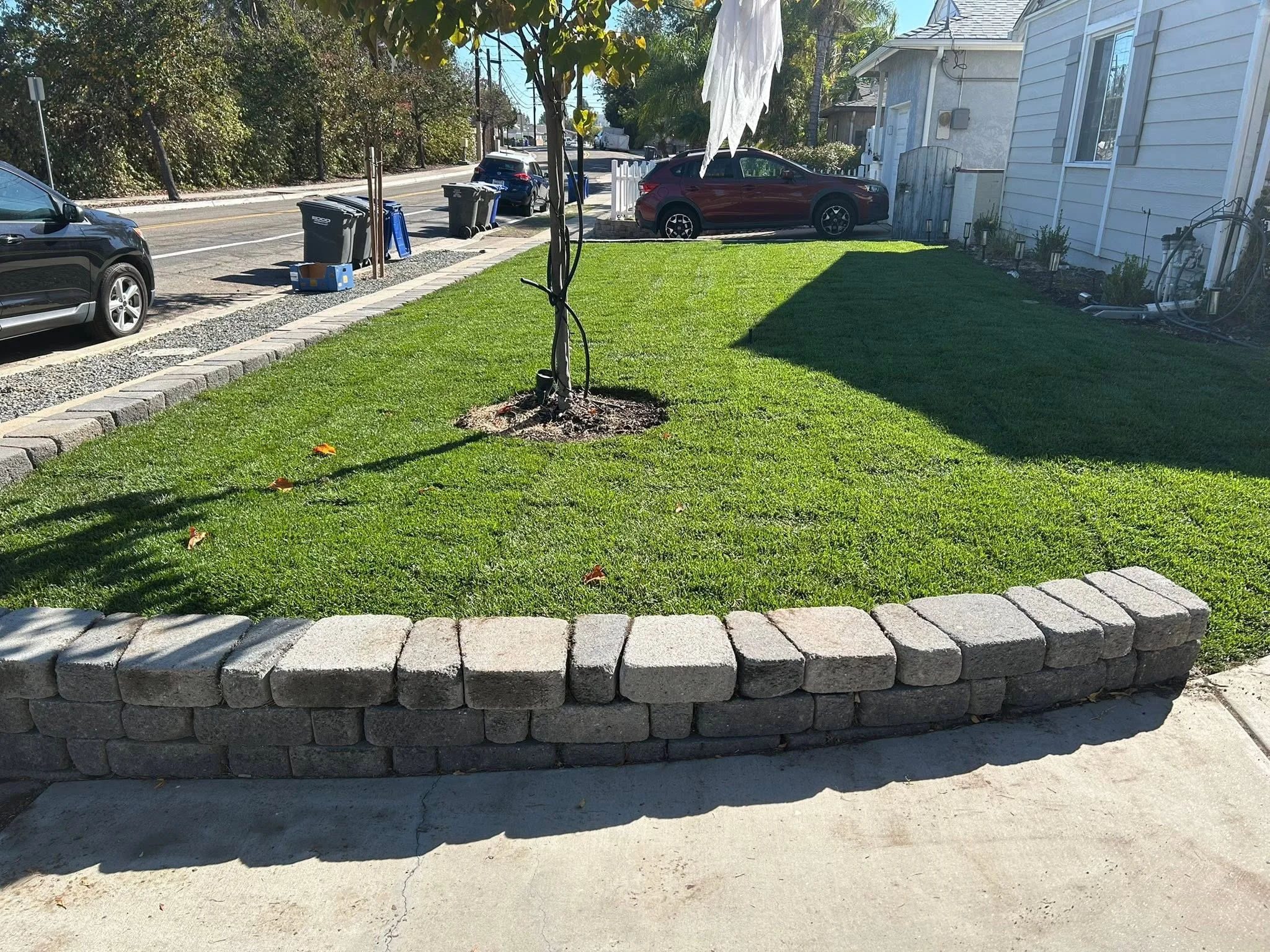
Sod installation (also called turf installation or grass installation) is the process of laying pre-grown grass rolls onto prepared ground to create an instant lawn. Each roll contains living grass with a shallow root mat pre-grown on a sod farm. Properly laid, the roots establish into your native soil within two to three weeks, and the lawn becomes fully functional – mowable, trafficked, and maintained – within four to six weeks.
The key difference between sod and seed is time. Seeding requires weeks of germination, months of careful watering, and an entire growing season before the lawn fills in consistently. Sod skips all of that. You start with a finished lawn.
For Chula Vista homeowners dealing with HOA appearance requirements, new construction timelines, or lawns damaged beyond recovery, sod is the fastest, most reliable path to a green yard.
If your lawn still has living grass that can recover, lawn renovation may be a suitable option before replacing the entire lawn. We assess the existing turf and soil before recommending either approach.
Best Grass Types for Sod Installation Chula Vista
Choosing the wrong grass variety is one of the most common and costly mistakes in sod installation. Chula Vista’s Mediterranean climate – 261 sunny days per year, 47°F winter low, 78°F summer high, only 11 inches of annual rainfall – strongly favors warm-season grasses, but the right choice depends on your specific lot conditions.
| Grass Variety | Sun Requirement | Drought Tolerance | Traffic Tolerance | HOA Color Nov–Feb | Best For |
|---|---|---|---|---|---|
| TifTuf Bermuda | Full sun | ★★★★★ | ★★★★★ | Goes dormant (brown) | Water-restricted lots, Otay Water District customers |
| Tifway 419 Bermuda | Full sun | ★★★★☆ | ★★★★★ | Goes dormant (brown) | Eastlake, Otay Ranch – standard HOA choice |
| Celebration Bermuda | Full sun | ★★★★★ | ★★★★☆ | Goes dormant (brown) | High-traffic yards, active families |
| St. Augustine | Partial shade OK | ★★★☆☆ | ★★★☆☆ | Stays greener in winter | Shaded lots, western Chula Vista, HOAs requiring year-round green |
| Marathon II (tall fescue) | Partial to full sun | ★★☆☆☆ | ★★★☆☆ | Full green year-round | Shaded lots, homeowners wanting year-round green |
TifTuf Bermuda has become the most requested variety for eastern Chula Vista properties in recent years. It uses 38 percent less water than standard Bermuda while maintaining the same visual quality – a significant advantage for Otay Water District customers trying to stay in lower pricing tiers.
St. Augustine is the right call for properties with mature trees, shade from structures, or homeowners whose HOA sub-association flags brown dormancy periods. It establishes quickly, tolerates Chula Vista’s coastal conditions well, and holds color through winter when Bermuda goes dormant.
Marathon II tall fescue is the true year-round green option but requires more water to maintain through summer. It works well in shaded lots where Bermuda would thin out anyway.
How to Choose the Right Sod for Your Chula Vista Property
Four questions will narrow your choice to the right variety:
1. How much direct sun does your yard get?
Full sun (6+ hours) opens up all Bermuda varieties. Partial shade (under 4 hours) pushes you toward St. Augustine or Marathon II. Bermuda in heavy shade thins rapidly regardless of watering.
2. How active is your yard?
Kids, dogs, and regular foot traffic demand a high-traffic variety — Tifway, TifTuf, or Celebration Bermuda. St. Augustine holds up to moderate use but isn't designed for sport-level abuse.
3. What does your HOA require?
Many Eastlake and Otay Ranch sub-associations have approved grass type lists. Some flag extended brown dormancy periods. If your HOA has specific variety requirements or year-round green standards, confirm before ordering sod.
4. What's your water situation?
Otay Water District customers on tiered pricing should lean toward TifTuf Bermuda for its superior drought tolerance. All new sod requires establishment watering (contact your water district for the new-install exemption process before we begin).
Signs It's Time to Replace Your Lawn With New Sod
More than 40–50% of the lawn is dead or bare
overseeding won't fill this effectively in one season
Root-level damage
from grubs, soil disease, or persistent irrigation failure — new soil prep + sod resets the foundation
Severe compaction with no living root system
if there's nothing alive to recover, there's nothing to recover
After new construction
builder-graded lots are typically compacted subsoil with no organic matter; sod needs full ground preparation regardless
HOA notice with a compliance deadline
sod is the only way to get from dead to green fast enough to satisfy most HOA timelines
Drought damage after irrigation failure
if the root system burned out during a broken sprinkler period, seeding won't recover it before the next summer
Our Sod Installation Chula Vista Process
Step 1 — Site Assessment and Grass Variety Selection
We measure the turf area, evaluate sun exposure, shade patterns, slope, soil condition, and any HOA requirements you've shared. We recommend the right grass variety and confirm the square footage for your quote.
Step 2 — Irrigation System Check
Before any ground work begins, we verify your irrigation system is functioning. New sod needs consistent, precise watering during establishment — a broken head or coverage gap during this period can kill a section of new sod before it roots. Any needed repairs happen first.
Step 3 — Old Vegetation Removal
We remove existing dead or living grass using a sod cutter. If there's significant debris, thatch, or weed mass, we clear it completely. On heavily infested sites, herbicide application two weeks prior to installation is recommended to prevent existing weeds from pushing back through new sod.
Step 4 — Soil Grading and Amendment
Chula Vista's clay soils often need amendment before sod performs well. We till, grade, and amend as needed — adding organic matter to heavy clay, correcting pH toward the 6.0 to 7.0 range ideal for Bermuda, and addressing any drainage problems. For Bermuda sod specifically, alkaline soil (pH 7.2 to 7.8, which is common in Eastlake and Otay Ranch) needs correction to prevent the iron absorption issues that cause yellowing in the first growing season.
Step 5 — Starter Fertilizer Application
We apply a starter fertilizer high in phosphorus before laying sod. Phosphorus drives root development — the single most critical factor in how fast new sod establishes and how well it survives the first summer.
Step 6 — Sod Delivery and Installation
We lay sod rolls in a staggered brick pattern, pressing seams tightly together to eliminate gaps where weeds could establish. Seams are butted — not overlapped — and edges are trimmed to fit curves and beds cleanly. On sloped areas, we orient rolls across the slope and pin sections if needed to prevent roll-back during early establishment watering.
Step 7 — Rolling
After all sod is laid, we roll the entire surface with a lawn roller to press sod firmly against soil, eliminate air pockets, and even the surface. Air pockets beneath sod are one of the most common causes of new-sod failure — rolling eliminates them.
Step 8 — Initial Watering and Care Brief
We water immediately after installation and walk you through the establishment watering schedule: twice daily for the first week, once daily for week two, then tapering to a normal schedule in week three. We also advise on foot traffic restrictions, mowing timing (first mow at approximately three to four weeks), and fertilization timing.
Sod Installation Chula Vista — HOA Requirements in Eastlake and Otay Ranch
If you live in an Eastlake or Otay Ranch community, HOA approval is a mandatory step before sod installation – not a formality.
Most HOA sub-associations in Eastlake (Eastlake Greens, Eastlake Trails, Eastlake Vistas, Eastlake Shores, Eastlake I, Eastlake III) and Otay Ranch villages require you to submit a Landscape Modification Request specifying the grass variety, the project scope, and sometimes the contractor. Approval can take one to four weeks depending on the sub-association’s review cycle.
Common HOA sod-related requirements in Chula Vista communities:
- Specific approved grass varieties (Bermuda varieties generally approved; invasive or non-approved varieties flagged)
- Maximum slope percentage for sod installation without retaining features
- Restrictions on installation timing relative to community aesthetics
- Post-installation maintenance commitments (you may need to demonstrate the new lawn is maintained to HOA standards within 60–90 days)
The dormancy issue: Bermuda grass goes dormant and turns brown from approximately November through February. Some HOA sub-associations require year-round green. If yours does, St. Augustine or Marathon II tall fescue are the more compliant choices. We’ll advise specifically based on your sub-association once you share the relevant HOA requirements.
Sod Installation Chula Vista Cost
Small yard (500–1,000 sq ft)
$1,200 – $2,500 Typical side yards, small front lawns in Terra Nova or Sunbow
Average residential (2,000–3,500 sq ft)
$3,000 – $6,500 Most Eastlake and Otay Ranch front and back yard combinations
Large or complex (5,000+ sq ft)
$7,500 – $15,000+ Corner lots, properties requiring significant grading or amendment
Sod installation pricing varies by yard size, grass variety, extent of ground preparation required, and whether old lawn removal is included.
Price variables:
- Grass variety. TifTuf and Celebration Bermuda carry a moderate premium over standard Tifway; St. Augustine is priced similarly. Marathon II tall fescue is comparable to mid-range Bermuda.
- Ground preparation. Properties with heavy clay, poor drainage, or severe compaction require more prep work – typically $0.50 to $1.00 per square foot additional.
- Old lawn removal. If your existing lawn needs to be cut, hauled, and disposed of, add $0.30 to $0.75 per square foot.
- Slope and access. Steep slopes or difficult access requiring manual carry (no equipment access) adds labor.
- Soil amendment. Significant pH correction or organic matter addition on clay-dominant soil adds material cost.
Call (619) 604-8495 for a free on-site estimate. We measure your yard, assess the soil condition, and give you an itemized price – no guesswork.
How to Care for New Sod After Sod Installation Chula Vista
The first four weeks after sod installation determine how well your lawn performs for the next decade. These are the most important care guidelines:
Weeks 1–2: Establishment watering
Water twice per day — once in the early morning and once in late afternoon. Each session should wet the soil 2 to 3 inches below the sod. Keep the sod moist at all times; let it dry out and sections will die before rooting. If you're an Otay Water District or Sweetwater Authority customer, contact your water district before installation about the new-sod watering exemption. Both districts allow temporary increases in watering frequency for newly installed turf — you'll need to notify them in advance to avoid water waste violations.
Weeks 1–3: No foot traffic
Stay off the new sod except to water. No kids, no pets, no shortcuts across the lawn. The roots haven't established yet, and pressure will shift the sod off-grade and tear the shallow root mat from the soil.
Week 3–4: Light activity permitted
After three weeks, you can begin light use. Test root establishment by tugging a corner of sod — it should resist firmly. If it releases easily, give it another week.
Week 4: First mow
Mow for the first time at week four at 1.5 to 2 inches for Bermuda, or 3 to 3.5 inches for St. Augustine and Marathon II. Never remove more than one-third of the blade height in a single mowing. A dull or low mow on new sod causes stress that sets establishment back.
6–8 weeks post-install: First fertilizer application
After your sod has fully rooted — typically six to eight weeks — apply your first maintenance fertilizer dose. The starter fertilizer applied before installation is spent by now; follow-up feeding locks in the density gains from the establishment phase. Pairing this with our fertilization program ensures you're on the right schedule for Chula Vista's seasonal feeding calendar.
Year 1 milestone: Aeration
After your first full growing season (typically 10 to 12 months post-installation), lawn aeration helps consolidate root depth and break up any compaction that accumulated during establishment. It also greatly improves water efficiency going into year two.
Frequently Asked Questions About Sod Installation Chula Vista
What is sod installation?
What is the best grass for sod in Chula Vista?
How much does sod installation cost in Chula Vista?
When is the best time for sod installation Chula Vista properties?
How long does sod installation take?
How soon can I walk on new sod?
Does Bermuda sod go dormant in Chula Vista?
Do I need HOA approval for sod installation?
How do I water new sod under Otay Water District restrictions?
Should I test my soil before sod installation?
Sod Installation Chula Vista Service Areas
We serve the following Chula Vista neighborhoods and communities:
Not sure if we cover your property? Call (619) 604-8495 and we will confirm.
Eastlake
Eastlake Greens, Eastlake Trails, Eastlake Vistas, Eastlake Shores; HOA approval process guidance included
Otay Ranch
all village areas; large lots with complex grading experience
Rancho del Rey
established neighborhoods with mature landscape replacement projects
Terra Nova
compact residential lots, often full-sun Bermuda candidates
Sunbow
family neighborhoods; high-traffic-tolerance varieties recommended
Bonita
service extends to neighboring Bonita properties
Ready for a New Lawn? Call for a Free Sod Installation Chula Vista Estimate
Whether you’re replacing a dead lawn, starting fresh on a new build, or finally addressing the patchy yard that’s been generating HOA notices, professional sod installation Chula Vista delivers immediate results.
We handle every step – from selecting the right grass variety for your sun, traffic, and HOA requirements to ground preparation, installation, and post-install care guidance. We serve all Chula Vista neighborhoods and our work is backed by a free estimate and straightforward pricing.
Pair your new sod with our ongoing lawn maintenance to keep it healthy year-round and our fertilization programs to lock in the green from your first growing season.
Call (619) 604-8495 for a free sod installation Chula Vista estimate. No contracts. Itemized pricing on every job.