Lawn Aeration in Chula Vista, CA | Core Aeration Service
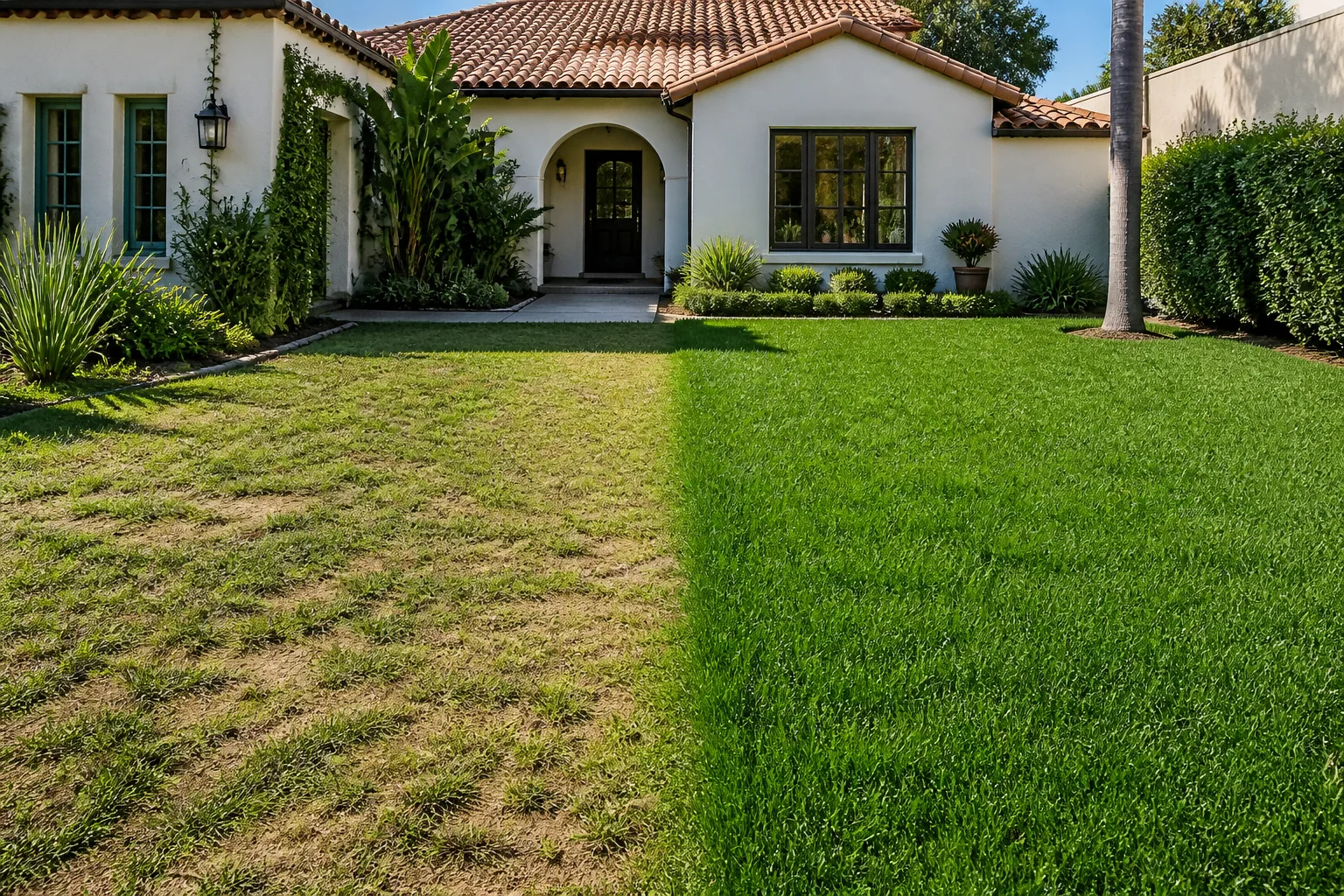
Our lawn aeration Chula Vista service solves this. We use commercial hollow-tine equipment to pull small plugs of soil from your lawn, opening pathways for oxygen, water, and nutrients to reach the root zone where they’re actually needed.
- Professional Core Aeration
- Chula Vista Service Area
- Free Estimates
When the Problem Is Underground
If you’ve watered your Chula Vista lawn consistently, fertilized it on schedule, and still can’t figure out why it looks thin, patchy, or tired – the problem is probably underground. Chula Vista’s clay-heavy soils compact over time, and once compaction sets in, water puddles on the surface instead of reaching roots, fertilizer can’t penetrate, and your grass slowly runs out of room to grow.
The result is a thicker, greener, healthier lawn – and one that stays that way longer because the roots are finally deep enough to handle Chula Vista’s warm summers.
We provide professional core aeration throughout Chula Vista, including Eastlake, Otay Ranch, Rancho del Rey, Sunbow, and surrounding neighborhoods. Free estimates – call (619) 604-8495.
Compacted clay soil
Poor water penetration
Shallow roots
Thin or patchy lawn
What Is Lawn Aeration?
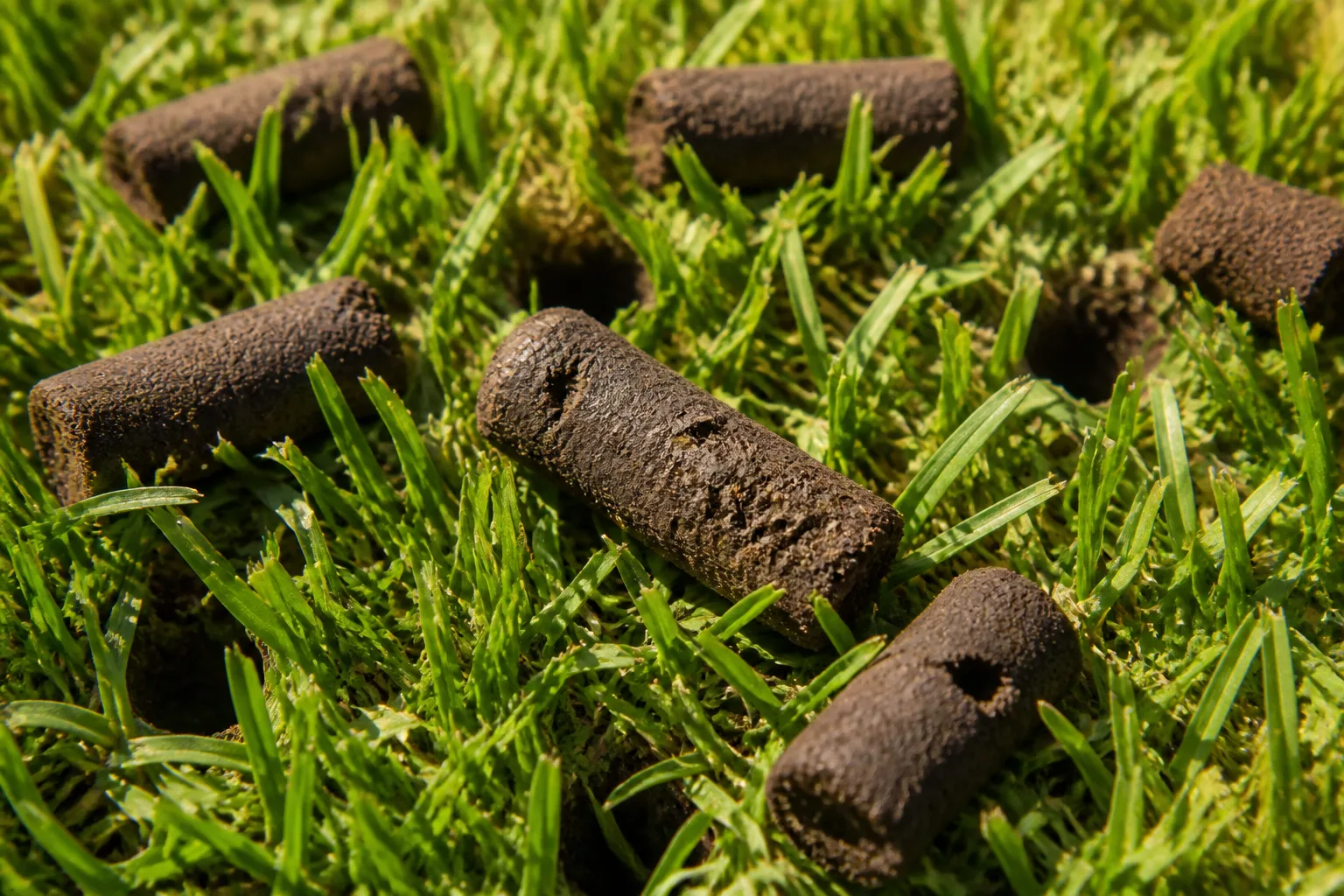
Lawn aeration is the process of mechanically removing small plugs of soil and thatch from your lawn using hollow metal tines. These plugs – typically 2 to 3 inches long – are pulled out of the ground and left on the surface to break down naturally. The holes they leave behind allow air, water, and nutrients to penetrate directly to the root zone rather than being blocked by compacted soil.
There are two types of aeration: core (plug) aeration and spike aeration. Core aeration physically removes soil material, creating genuine open channels. Spike aeration pokes holes without removing anything, which can actually compress clay soils sideways and worsen compaction.
For Chula Vista lawns – which sit on some of the region’s heaviest clay soil – core aeration is the only method that delivers lasting results.
Core Aeration vs. Spike Aeration: What Chula Vista Lawns Actually Need
| Feature | Core (Plug) Aeration | Spike Aeration |
|---|---|---|
| Removes soil material | ✅ Yes – physical plug removal | ❌ No – only pokes holes |
| Relieves clay compaction | ✅ Highly effective | ⚠️ Can worsen clay compaction |
| Long-term relief | ✅ Open channels persist weeks | ❌ Holes close within days |
| Compaction relief improvement | 30–50% better than spike | Baseline |
| Recommended for Chula Vista | ✅ Yes | ❌ Not recommended |
| Equipment type | Commercial hollow-tine aerator | Spike roller or solid tine |
The difference matters more in Chula Vista than in most cities. Our clay-dominant soils have almost no give – when spike aeration pushes solid tines into the ground, the soil compresses sideways rather than opening up. Core aeration removes the material entirely, so the channels stay open long enough for roots to grow into them.
Signs Your Chula Vista Lawn Needs Aeration
Most homeowners don’t know their soil is compacted until they see the symptoms. Look for two or more of the following:
Water pools after irrigation or rain
rather than soaking in within 30 minutes
A screwdriver won't push 4 inches into the soil
without significant force
Grass thins out along high-traffic paths
walkways, play areas, pet routes
Thatch layer is thicker than ½ inch
when you push a spade into the edge of your lawn
Fertilizer seems to do less
than it did a year or two ago
Roots are shallow
grass lifts easily in patches when pulled
Lawn feels spongy underfoot
in spots (excessive thatch) or rock-hard throughout
If you’re seeing any combination of these, your soil is telling you it’s compacted. The fix isn’t more water or more fertilizer; it’s aeration first, then nutrients.
When to Aerate Your Lawn in Chula Vista
Timing matters more than most homeowners realize. The goal is to aerate when your specific grass type is actively growing so it recovers fast and fills the plug holes with new roots within days.
| Grass Type | Best Aeration Window | Avoid |
|---|---|---|
| Bermuda grass | Late April – June | Nov–Feb (dormancy), Aug peak heat |
| St. Augustine grass | April – May | Nov–Jan, peak summer heat |
| Tall fescue / cool-season | Oct – November or Feb – March | Summer dormancy |
| Mixed warm/cool season | Late April (prioritize warm-season timing) | Transition months |
For most Chula Vista neighborhoods – Eastlake, Otay Ranch, Rancho del Rey – Bermuda grass is the dominant variety. Late April through June is the ideal window: the lawn is fully green and growing hard, temperatures are warm but not yet at their August peak, and recovery is fast.
One critical rule: never aerate Bermuda grass while it’s dormant (November through February). Dormant Bermuda turns brown naturally and looks alarming to homeowners, but it’s healthy – aerating it during this period stresses the plant, disrupts winter root storage, and leaves bare soil vulnerable to weed germination in spring.
Why Chula Vista's Clay Soils Make Compaction Worse
Not every city has a clay soil problem as significant as Chula Vista’s. The soils across much of Chula Vista – particularly in eastern neighborhoods like Eastlake and Otay Ranch – are heavy clay with a tendency toward compaction even without extreme foot traffic.
Clay particles bind tightly together. Unlike sandy coastal soils that remain loose, clay soil can compact under something as routine as regular mowing, kids playing, or even rainfall. Once compacted, the soil behaves almost like concrete: water sheets off the surface instead of percolating down, root growth stalls at 2 to 3 inches instead of reaching 6 to 12 inches, and the grass on top slowly deteriorates even when it’s receiving water.
There are two compounding factors unique to Chula Vista:
Water District tiered pricing.
Customers of Otay Water District (serving Eastlake and Otay Ranch) and Sweetwater Authority (serving western Chula Vista) both operate under tiered rate structures that penalize overuse. Compacted lawns need significantly more water to stay green because much of that water runs off rather than reaching roots. Aeration breaks this cycle – lawns that have been properly aerated typically need 20 to 30 percent less irrigation water to maintain the same appearance, which matters when you’re trying to stay in the lowest rate tier.
HOA appearance standards.
Eastlake has six sub-associations with visible lawn standards. Otay Ranch communities maintain high landscaping expectations throughout the year. Compacted soil is the root cause of most thin lawns, bare patches, and persistent brown areas that generate HOA notices – and aeration is the fix that actually addresses the cause rather than just masking it.
Our Core Lawn Aeration Chula Vista Process
Here’s exactly what happens when we come to your property:
Pre-aeration soil moisture check
We need the soil moist but not wet. We’ll tell you to water one to two days before your appointment if the ground feels dry. Dry clay soil is too dense for tines to penetrate fully.
Irrigation head marking
Flag all sprinkler heads before we arrive. We work around everything you’ve marked and recommend having any broken heads repaired beforehand – aerating over a leaking head can push the problem deeper.
Multiple passes with commercial hollow-tine equipment
We make at least two overlapping passes across the entire lawn – more in areas of severe compaction. Each pass pulls plugs at 3-inch intervals, leaving behind open channels approximately ¾ inch in diameter and 2 to 3 inches deep.
Plugs left on surface
The soil plugs stay on your lawn. They look messy for about a week, but they’re doing a job: as they break down, they return organic matter and beneficial soil microorganisms back to the surface, which accelerates natural thatch breakdown.
Post-aeration care briefing
We walk you through what to do next: irrigation timing, whether overseeding makes sense for your lawn, and whether a fertilization application is worth scheduling now while the channels are open.
Aeration and HOA Compliance in Eastlake and Otay Ranch
If you’ve received an HOA notice about your lawn’s appearance in Eastlake or Otay Ranch, or you’re trying to prevent one, aeration is one of the most effective tools you have.
Most thin, patchy, or persistently brown lawn areas in these communities share the same root cause: compacted clay soil that’s starving roots of water and oxygen. The grass grows at the surface, but its root system never gets deep enough to handle heat, foot traffic, or the slight dips in irrigation efficiency that happen over summer.
The visible symptoms – bare spots, thin turf in traffic areas, fertilizer that doesn’t seem to green anything up – are HOA notice triggers. But they’re also fixable once you address the underlying compaction.
After lawn aeration Chula Vista, the plug holes fill with white, actively growing roots within 7 to 10 days. By week three or four, you’ll see measurable thickening in previously thin areas, especially if you pair aeration with a fertilization application while the channels are open.
Bermuda grass is particularly responsive to this combination. A properly aerated and fertilized Bermuda lawn in Eastlake or Otay Ranch will outperform its neighbors’ lawns within a single growing season.
What to Do After Lawn Aeration
The three to four weeks after lawn aeration Chula Vista service are the most important window for your lawn all year. Here’s how to get the most from the service:
Water within 48 hours.
The newly opened channels dry out quickly in Chula Vista’s warm climate. Water within 24 to 48 hours of your aeration appointment and maintain consistent irrigation for the following two weeks. For Otay Water District customers, plan your appointment date around your allowed watering days.
Pair with fertilization.
This is the best time to apply a fertilizer program. Nutrients go directly through the open plug holes into the root zone instead of sitting on a compacted surface. If you have a fertilization program scheduled, time it within 72 hours of aeration.
Consider overseeding.
If your Bermuda lawn has thin spots, the aeration holes are ideal seed-to-soil contact points. Bermuda seed dropped on a freshly aerated lawn establishes faster than seed on intact turf. We can recommend the right variety and application rate for your specific area.
Hold off on weed control.
If you have weed control scheduled, wait at least four weeks after aeration before applying pre-emergent products. Aeration disrupts the pre-emergent barrier in the soil – applying immediately after will waste the treatment.
Continue your regular lawn maintenance.
Keep mowing at your normal height through your lawn maintenance program. Don’t skip irrigation or let the lawn dry out during recovery. If a sprinkler system check finds any known issues, get those repaired before or shortly after aeration so the recovery period gets consistent moisture.
Lawn Aeration Chula Vista Pricing
Aeration pricing depends primarily on the square footage of turf, the soil condition, and whether you’re adding any follow-on services. Here’s a straightforward breakdown:
Small (under 5,000 sq ft)
$120 – $160
Single-family home, tight lots common in Terra Nova, Sunbow
Average (5,000 – 10,000 sq ft)
$160 – $240
Most Eastlake and Otay Ranch residential lots
Large / complex (10,000+ sq ft)
$240 – $450
Large corner lots, slopes, steep grades, heavy clay requiring extra passes
What affects your specific quote
Slope and access.
Steep grades require walk-behind equipment and take longer.
Soil condition.
Heavily compacted clay may require three or more passes vs. two.
Narrow gates or obstacles.
Anything under 36 inches wide limits equipment choice.
Add-ons.
Overseeding, starter fertilizer application, and topdressing quote separately.
Call (619) 604-8495 for a free estimate. We price by your actual property, not a flat-rate formula.
Frequently Asked Questions: Lawn Aeration Chula Vista
What is lawn aeration?
When is the best time to aerate a lawn in Chula Vista?
How much does lawn aeration cost in Chula Vista?
How often should I aerate my Chula Vista lawn?
What's the difference between core aeration and spike aeration?
Should I water before or after aeration?
Can I fertilize right after aeration?
Will aerating help with my HOA lawn requirements?
How long before I see results?
Is it safe to aerate if I have a sprinkler system?
Lawn Aeration Chula Vista Service Areas
We provide lawn aeration Chula Vista throughout all major neighborhoods, including:
Eastlake
High-traffic HOA neighborhoods with Bermuda grass; twice-yearly aeration often recommended
Otay Ranch
Large residential lots with clay soils and manicured lawn standards
Rancho del Rey
Established community with mature lawns that benefit from annual aeration
Terra Nova
Compact residential lots with fescue and Bermuda mix
Sunbow
Family neighborhoods with heavy foot traffic
Bonita
Service area includes neighboring Bonita properties
Our lawn aeration Chula Vista team confirms coverage same-day. Call (619) 604-8495; we’ll confirm same-day.
Ready to Book Lawn Aeration Chula Vista?
If your lawn is thin, patchy, rejecting water, or triggering HOA notices, compacted soil is almost certainly the underlying problem. Professional lawn aeration Chula Vista opens the root zone, allows water and nutrients to penetrate, and gives your Bermuda or St. Augustine grass the foundation it needs to thicken up and stay green through Chula Vista’s warm season.
We provide lawn care in Chula Vista, including core aeration, fertilization program, weed control, and sprinkler system check. Most jobs are scheduled within the week.
No contracts. Straightforward pricing.