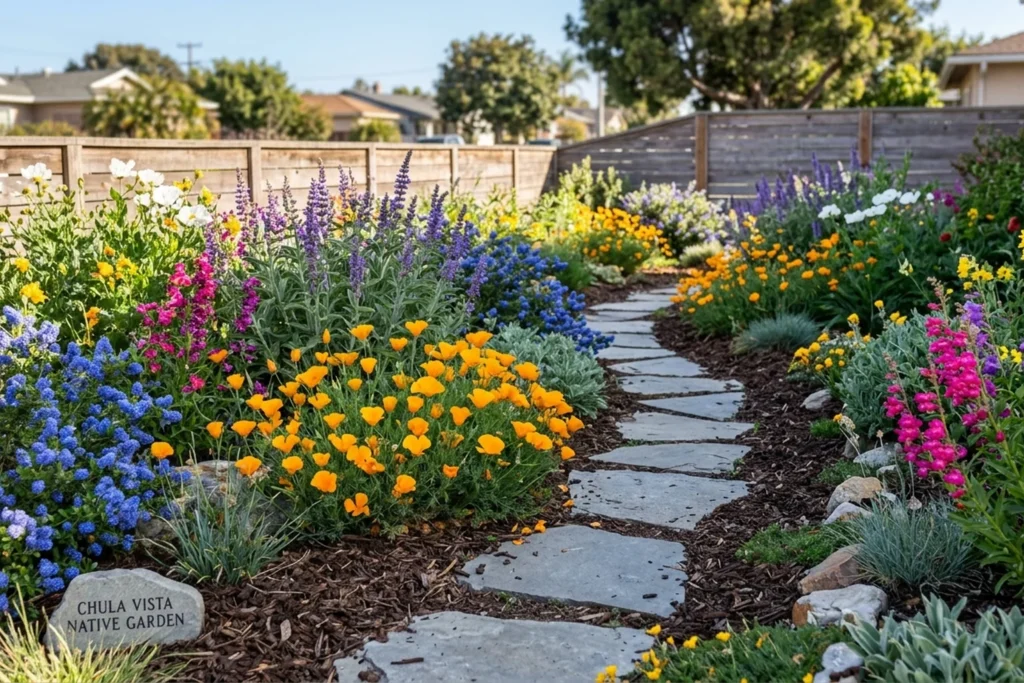
The best native plants for Chula Vista landscaping are tough, low-water species that match South Bay’s dry summers, mild winters, clay pockets, sunny slopes, and neighborhood HOA expectations. Good choices include California buckwheat, Cleveland sage, black sage, California fuchsia, monkeyflower, deergrass, ceanothus, manzanita, toyon, lemonade berry, coyote brush, yarrow, penstemon, and San Diego sunflower.
That does not mean every yard should become wild brush. A native landscape can look clean, intentional, and neighborhood-friendly when plants are grouped by water needs, repeated in simple patterns, edged well, mulched deeply, and irrigated correctly during establishment.
This guide explains what thrives here, where each plant fits, and how to avoid the common mistakes that make native yards fail.
Quick Answer: What Native Plants Work Best in Chula Vista?
For most Chula Vista homes, start with a structure plant, a pollinator shrub, a low ground layer, and one or two seasonal color plants. That mix gives the yard shape even when some plants rest during the dry season.
| Yard Need | Native Plants That Often Fit | Why They Work Here |
|---|---|---|
| Front yard structure | Toyon, lemonade berry, manzanita, ceanothus | Evergreen or semi-evergreen form, good curb appeal, habitat value |
| Pollinator color | California buckwheat, Cleveland sage, black sage, penstemon, monkeyflower | Flowers for bees, butterflies, and hummingbirds |
| Hot parkways | Deergrass, yarrow, California fuchsia, coyote brush | Handles sun, reflected heat, and low-water design |
| Slopes | California buckwheat, coyote brush, deergrass, lemonade berry | Roots help hold soil once established |
| Privacy | Toyon, lemonade berry, ceanothus, scrub oak in larger spaces | Screens views without a tropical water demand |
| Patio edges | Monkeyflower, yarrow, penstemon, compact sages | Color near seating areas without oversized growth |
| Lawn replacement | Deergrass, yarrow, native meadow mixes, groundcover manzanita where suited | Less mowing and less irrigation than traditional turf |
If the yard still has struggling grass, it may be better to plan the whole conversion before removing turf. Our guide to drought-tolerant landscaping in Chula Vista explains how water-wise layouts, mulch, drip irrigation, and turf reduction work together.
Why Native Plants Make Sense in Chula Vista
Chula Vista sits between coastal influence and warmer inland South Bay conditions. A yard near the bay may get more marine air. A yard in Eastlake, Otay Ranch, or near the hills can feel hotter and drier by afternoon. That matters.
California natives evolved with seasonal rainfall, dry summers, lean soils, and long stretches without summer rain. UC Master Gardeners of San Diego County notes that native plants often need less water and less work once established, while also supporting local biodiversity.
The City of Chula Vista’s NatureScape program also points homeowners toward healthy soil, right-plant/right-site planning, WaterSmart irrigation, mulch, reduced lawn area, and non-toxic pest control. That is the local blueprint.
In plain terms, native plants help solve four Chula Vista yard problems:
- Water demand from thirsty turf and ornamentals
- Brown slopes and parkways that bake in summer
- Weed pressure in bare soil, gravel strips, and thin mulch
- Generic landscapes that look the same in every zip code
For homeowners comparing design options, landscaping services in Chula Vista should focus on plant placement, irrigation zones, soil prep, drainage, and maintenance access. The plant list matters, but the layout decides whether the yard holds up.
Best Native Shrubs for Chula Vista Yards
Shrubs are the backbone of a native yard. They give the landscape shape after spring flowers fade.
California Buckwheat
California buckwheat is one of the safest starting points for native plants chula vista landscaping because it fits dry slopes, sunny front yards, pollinator gardens, and informal borders. It has clusters of white to pinkish flowers that age into rust tones. Bees and butterflies use it heavily.
Use it where you want a natural look without constant pruning. Give it room. Crowding buckwheat against a narrow walkway can make the yard feel messy.
Cleveland Sage
Cleveland sage brings fragrance, purple flower spikes, and strong habitat value. It prefers good drainage and full sun to part sun. Once established, it usually wants far less summer water than traditional ornamental shrubs.
Do not bury it in a wet lawn zone. Sage planted next to high-water grass can decline because the root zone stays too damp.
Black Sage and White Sage
Black sage is a good fit for dry, sunny spaces where you want a wilder coastal sage scrub feel. White sage has a stronger silver look and cultural importance in Southern California, but it needs careful placement and should not be overwatered.
Both look best when repeated in small groups rather than scattered one at a time.
Toyon
Toyon gives a native yard structure. It can become a large shrub or small tree, with white flowers and red winter berries. Use it for background screening, side yards, and larger front yard corners.
In compact lots, check mature size first. A small nursery plant can become too large for a tight walkway.
Lemonade Berry
Lemonade berry is useful near coastal-influenced parts of Chula Vista and for screening. It has leathery leaves, wildlife value, and a sturdy form. It works best where a larger shrub can breathe.
For small yards, use it carefully. One well-placed shrub can look intentional. Three crowded ones can turn into maintenance.
Ceanothus
Ceanothus, often called California lilac, is popular for blue spring flowers. Some varieties stay compact. Others become large shrubs. It can be beautiful in Chula Vista, but drainage and variety selection matter.
Avoid placing ceanothus where sprinklers hit it all summer. That is one of the fastest ways to shorten its life.
Best Native Flowers and Color Plants
A native yard does not need constant bloom to look good. It needs seasonal rhythm. Spring is usually the strongest flower season, while late summer and fall require careful plant choice.
California Fuchsia
California fuchsia is one of the best late-season color plants. It brings red-orange flowers that hummingbirds use when many spring bloomers have slowed down.
It can spread. That is useful on a slope or open bed, but it may need edging near a patio.
Monkeyflower
Monkeyflower gives bright color and works well along entries, patios, and mixed borders. It can look tired in heat, then rebound with better conditions. Many homeowners mistake that seasonal rest for failure.
Place it where a little summer slowdown will not ruin the whole design.
Penstemon
Penstemon adds vertical flowers and a more polished garden look. It works well in front yards where the HOA or neighbor view matters. Use it near pathways, boulders, or low grasses for a tidy design.
Yarrow
Yarrow is flexible. It can work as a soft groundcover, meadow filler, or low flower layer. It is also useful in lawn-reduction projects where the homeowner wants something greener than bare mulch.
Yarrow still needs maintenance. Trim spent flowers and keep edges clean.
San Diego Sunflower
San Diego sunflower fits the local identity well. It brings yellow flowers and a dry-slope look that belongs in coastal Southern California. Use it in sunny beds where a looser native style is acceptable.
For a street-facing bed, use the repeated forms and clear edges in our Chula Vista front yard ideas. In a small backyard, keep spreading plants away from gates, seating, and irrigation access.
Best Native Grasses and Ground Layers
Native grasses and low plants make a yard look finished. Without them, a native landscape can feel like shrubs floating in mulch.
Deergrass
Deergrass is one of the most useful native grasses for Chula Vista yards. It forms clean clumps, handles dry conditions once established, and looks organized enough for HOA-visible spaces.
Use it in rows along walkways, in groups near boulders, or as a soft screen around patios. It also helps transition from hardscape to planting beds.
Coyote Brush
Low-growing coyote brush varieties can cover slopes and reduce bare soil. They are useful where weeds keep returning after winter rain.
Give coyote brush space. It is better as a mass planting than a tiny accent.
Groundcover Manzanita
Groundcover manzanita can look excellent in the right place. It needs drainage, room, and careful irrigation. It is not the easiest plant for every yard, but it can be a strong choice for slopes and larger beds.
Native Meadow Mixes
Native meadow-style plantings can work, but they are not a set-it-and-forget-it option. They require weed control, seasonal mowing or trimming, and patience. In a formal HOA neighborhood, a meadow may need a clean border to look intentional.
Before choosing a meadow, compare its weeding and seasonal cutting needs with a defined shrub bed. Our drought-tolerant landscaping guide explains how planting, mulch, and irrigation work together. Low water and low maintenance are related, but they are not the same thing.
Match Plants to Chula Vista Yard Conditions
The right native plant in the wrong spot still struggles. Before buying plants, walk the yard at different times of day.
Check these conditions:
- Full afternoon sun or only morning sun
- Slope, flat bed, or drainage low spot
- Clay-heavy soil or faster-draining amended area
- Sprinkler overspray from lawn zones
- Reflected heat from stucco, walls, pavers, and driveways
- Pet traffic, kid traffic, and trash-bin routes
- HOA visibility from the street
For native plants chula vista landscaping decisions, this site check matters more than a generic “best plants” list. The same sage that looks great on a sunny slope can struggle beside a leaky lawn sprinkler or in a shaded side yard.
The Calscape database is useful because it lets homeowners search California native plants by location, plant type, size, and site conditions. Use it before buying a plant because nursery tags can be too broad.
Here is a practical Chula Vista matching guide:
| Site Condition | Better Direction | Avoid |
|---|---|---|
| Hot front parkway | Deergrass, yarrow, California fuchsia, compact buckwheat | Large shrubs that block car doors or sidewalks |
| Dry sunny slope | Buckwheat, coyote brush, lemonade berry, deergrass | High-water flowers or shallow-rooted annual-only design |
| Patio border | Monkeyflower, penstemon, yarrow, compact sages | Thorny, oversized, or bee-heavy plants right next to seating |
| Privacy edge | Toyon, lemonade berry, ceanothus where suited | Tiny plants that never screen the view |
| Narrow side yard | Deergrass, yarrow, mulch, stepping stones | Spreading shrubs that close the walkway |
| Old lawn area | Turf removal, drip conversion, shrubs, grasses, mulch | Planting natives into an existing spray-lawn schedule |
Build a Plant List for Your Actual Chula Vista Lot
Use the City of Chula Vista native plant list as a starting point, then confirm each plant’s botanical name, mature spread, and site needs with the nursery. California native does not mean every species or cultivar fits every South Bay garden.
For a sunny Eastlake frontage, record reflected heat from paving before selecting sages. For a shaded Terra Nova border, measure the shade and check drainage rather than copying a full-sun planting plan. Place container citrus on a separate irrigation schedule from established dry-summer natives. On narrow Rancho Del Rey or Otay Ranch side yards, leave room for a gate to open and for drip filters and valves to be serviced.
Planting Season Matters
The best planting window for most California natives in Chula Vista is fall through early spring. UC Master Gardeners of San Diego County points to the rainy season, roughly November to April, as the best time to plant. That timing gives roots a cooler, wetter establishment period before summer stress.
Summer planting is possible, but it is harder. Plants need more attention, more careful watering, and protection from heat spikes.
A simple timeline:
| Season | Native Yard Task |
|---|---|
| October to November | Plan, remove turf, repair irrigation, plant early if weather cools |
| December to February | Strong planting window after rain begins |
| March to April | Still workable; monitor dry spells |
| May to June | Mulch, check drip, avoid major new planting during heat |
| July to September | Maintain, weed lightly, prune only where appropriate, plan fall changes |
This timing is also why native plants chula vista landscaping searches should lead to planting advice, not just a plant list. A homeowner who buys the right species in August and installs them into hot, dry soil may get worse results than a neighbor who waits for cooler weather, fixes irrigation first, and plants a smaller palette in November.
This is where irrigation planning matters. If old sprinklers are uneven or leaking, fix that before installing new plants. Native shrubs can fail from too much water in one area and too little in another. For coverage problems, see irrigation and sprinkler repair.
How Much Water Do Native Plants Need?
Native does not mean no water on day one. Most new plants need regular water during establishment. After the first year, many can be watered much less, depending on species, soil, sun exposure, and rainfall.
The City of Chula Vista recommends grouping plants by water needs, using efficient irrigation, checking leaks, and watering before sunrise or after sunset. That matters because mixed water needs are one of the biggest native landscaping mistakes.
Use hydrozones:
- Very low water: established buckwheat, sages, coyote brush, some manzanitas
- Low water: deergrass, yarrow, California fuchsia, monkeyflower, penstemon
- Moderate establishment water: young trees, new screening shrubs, fresh transplants
Do not put low-water natives on the same valve as thirsty turf. If you are keeping a lawn area, separate it from native beds. For homeowners who still need mowing, edging, and turf care, lawn care services can work alongside a native plant conversion when zones are clearly separated.
Soil, Mulch, and Weed Control
Native plants usually do not need rich, heavily amended planting holes. UC Master Gardeners notes that natives do best when planted in native soil. The bigger issue is soil structure, drainage, and mulch.
Chula Vista yards often have compacted soil from construction, foot traffic, or old turf. Before planting, loosen the planting area, remove turf roots, and avoid creating a bathtub effect where amended planting holes hold water in clay.
Mulch is not decoration. It moderates soil temperature, reduces evaporation, and helps suppress weeds. The City of Chula Vista also highlights mulch as part of a healthy, water-saving landscape.
Use mulch correctly:
- Keep mulch a few inches away from plant stems
- Use enough depth to shade soil
- Refresh thin areas before winter weeds germinate
- Avoid landscape fabric in planting beds where it blocks soil improvement
- Pull weeds before they seed
Native yards can still get weeds, especially during the first two winters. Bare soil, thin mulch, and overspray invite them. If weeds are already spreading through gravel, decomposed granite, or new beds, plan weed control in Chula Vista before adding more plants. Otherwise, the new landscape starts with a seed bank problem.
HOA-Friendly Native Landscaping
Some homeowners worry that native landscaping will look too wild for Eastlake, Otay Ranch, Rancho Del Rey, or Terra Nova. It can, if planted randomly. But it can also look very clean.
Use these rules for a polished native yard:
- Repeat the same plant in groups of three, five, or seven
- Keep a crisp edge along sidewalks and driveways
- Use boulders, stepping stones, or low walls to organize beds
- Put taller shrubs in the back, grasses in the middle, low flowers in front
- Leave enough spacing for mature size
- Prune selectively, not into stiff shapes
- Keep dead stems and seed heads only where they look intentional
Eastlake and Otay Ranch homes often need a more structured look near the street. A mixed native border can still fit if the plant palette is limited and tidy. For local maintenance context, see Eastlake lawn care and Otay Ranch lawn care.
In Terra Nova or older Chula Vista neighborhoods, yard layouts may have more mature trees, shade pockets, and irregular beds. That can favor shade-tolerant edges, mulch refreshes, and careful pruning. Our Terra Nova lawn care page covers neighborhood maintenance patterns.
Native Plants That Need More Caution
Not every native belongs in every Chula Vista yard.
Coast live oak can be excellent, but it needs space and thoughtful summer-water management. It is not a casual choice for a tiny front strip.
Large ceanothus varieties can outgrow small beds. Pick compact cultivars where space is limited.
White sage needs respect, sun, and drainage. It should not be squeezed into a wet, shaded corner.
Matilija poppy is beautiful, but it can spread aggressively. It works better in large areas than small HOA entries.
Some native annual meadow mixes can look dry or uneven in summer. That may be fine in a backyard, but not every front yard.
The goal is not to collect every famous California native. The goal is a yard that fits your site.
A Simple Chula Vista Native Plant Plan
For a typical sunny front yard, use this basic framework:
1. Remove or reduce weak turf. 2. Keep one clear walking route from driveway to entry. 3. Add two or three evergreen structure shrubs. 4. Repeat deergrass or yarrow along the edge. 5. Add buckwheat, sage, or penstemon for pollinator value. 6. Convert spray irrigation to drip where possible. 7. Mulch open soil. 8. Pull weeds during the first winter before they seed.
For a small backyard, simplify the palette even more:
- One shade or screen plant
- One flowering shrub
- One grass or ground layer
- One patio-friendly color plant
- One clean hardscape edge
That kind of design is easier to maintain than a crowded plant collection. It also photographs better for real estate, rentals, and HOA compliance.
For whole-yard planning, ChulaVistaLawnCare.com connects homeowners with Chula Vista lawn care and landscaping help and local service areas across South Bay.
Common Mistakes to Avoid
The biggest native plant mistakes are not mysterious. They are usually design and irrigation problems.
Avoid these:
- Planting in summer without a watering plan
- Mixing natives into a high-water lawn zone
- Buying plants only for flowers, not mature size
- Leaving bare soil open to weeds
- Using too many one-off plants
- Over-pruning shrubs into unnatural balls
- Assuming drought tolerant means no establishment water
- Ignoring drainage in clay-heavy beds
- Letting weeds seed in the first rainy season
Native plants chula vista landscaping projects work best when the yard is treated as a system. Plants, water, soil, mulch, hardscape, and maintenance all have to agree with each other.
When to Get Help
A small planting bed can be a weekend project. A full turf conversion, slope planting, irrigation change, or HOA-visible front yard usually needs more planning.
Get help if:
- Sprinklers overspray sidewalks or pavement
- Old turf roots and weeds keep returning
- The yard has drainage problems
- You need a front yard that looks neat year-round
- You are mixing native beds with existing lawn
- You want a plant list matched to sun, soil, size, and water zones
Call (619) 604-8495 if you want help planning a Chula Vista yard that uses native plants without looking unfinished. The right native layout should feel local, water-wise, and manageable, not like a random hillside planted next to the driveway.
FAQ
What are the best native plants for Chula Vista landscaping?
Some of the best options include California buckwheat, Cleveland sage, black sage, California fuchsia, monkeyflower, deergrass, ceanothus, manzanita, toyon, lemonade berry, coyote brush, yarrow, penstemon, and San Diego sunflower. The best choice depends on sun, soil, drainage, mature size, and irrigation.
Are native plants low maintenance in Chula Vista?
They can be low maintenance once established, but they still need smart planting, first-year water, mulch, weed control, and occasional pruning. A native yard is usually lower maintenance than thirsty turf, but it is not maintenance-free.
When should I plant native plants in Chula Vista?
Fall through early spring is usually best. UC Master Gardeners of San Diego County points to the rainy season, roughly November through April, as the best planting window. Summer planting is harder because new roots face heat and dry soil.
Do native plants need irrigation?
Yes, especially during establishment. Many native plants need regular water during the first months and sometimes the first year. After that, many can handle much less water, depending on the plant and site. Drip irrigation and hydrozones help prevent overwatering.
Can native plants work in HOA neighborhoods?
Yes. Use repeated plant groups, clean edges, mulch, clear walkways, and a limited palette. Deergrass, penstemon, yarrow, compact sages, ceanothus, and well-placed shrubs can look polished enough for HOA-visible front yards.
What is the easiest native plant to start with?
California buckwheat, deergrass, yarrow, and some sages are good starting points for many sunny Chula Vista yards. Still, check mature size and water needs before planting.
How do I stop weeds in a native plant yard?
Start with clean turf removal, mulch bare soil, use drip instead of broad overspray, pull weeds before they seed, and avoid leaving open dirt through winter. Weed control is most important during the first one or two rainy seasons.
Are California native plants better than succulents?
They solve different problems. Native plants support local habitat and fit the regional ecology. Succulents can be useful for low-water structure and visual contrast, but many common succulents are not California natives. A good Chula Vista yard can use natives as the anchor with selected climate-friendly plants where they fit.